Aqua, a Bachelor in Organizational Leadership and Technical Management student, studied at Sogang University in Seoul, South Korea for the Summer 2025 quarter through the Washington State Community College Consortium for Study Abroad (WCCCSA). Aqua shares with us about her typical day and cross-cultural experiences.
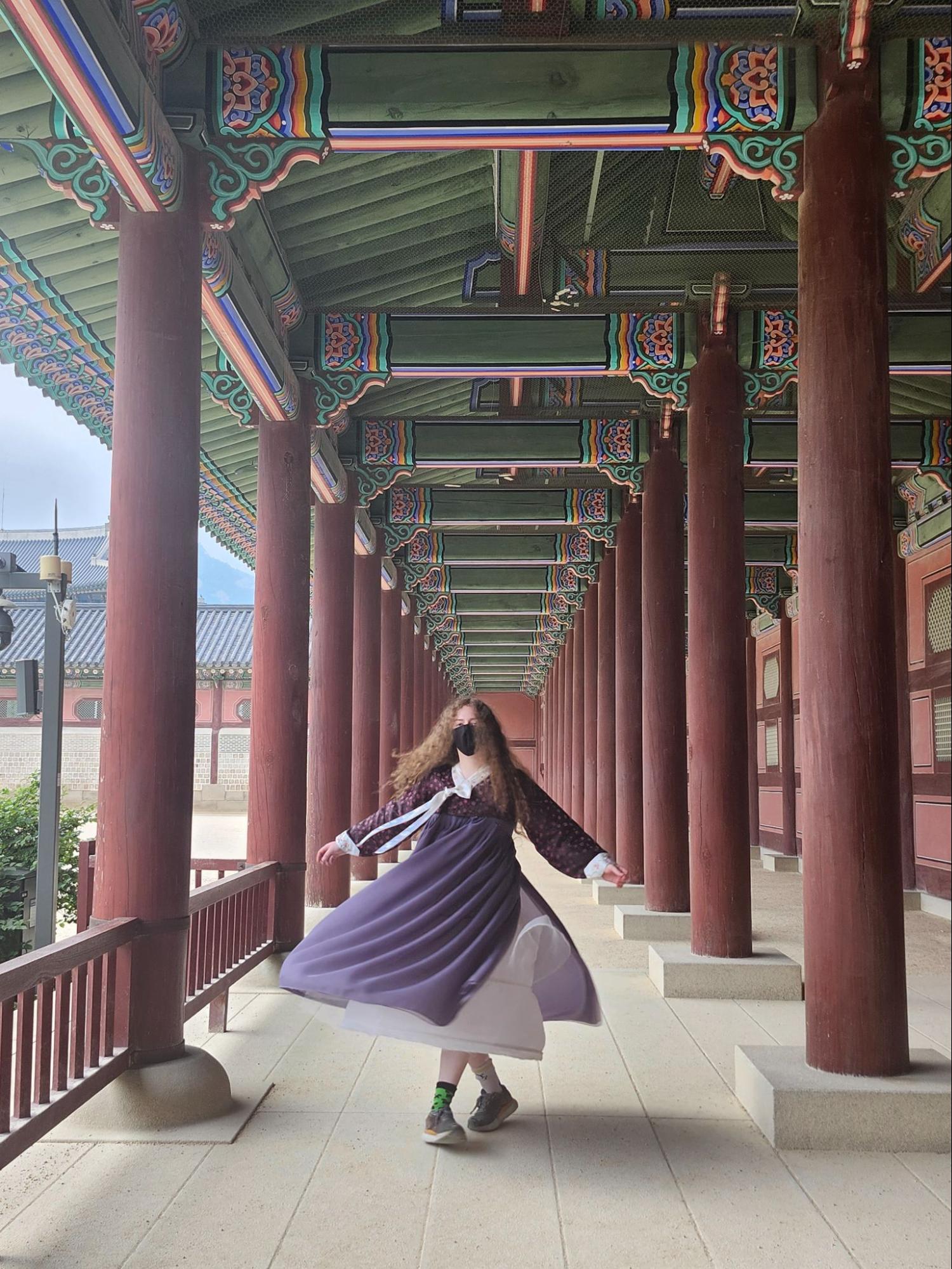
A Typical Day
Every weekday, I would wake up to get ready for classes, having breakfast at the campus Starbucks. Korea has a much bigger café culture than the U.S., so even their Starbucks are more sophisticated, with menu items such as fluffy cream cakes and Korean-style breakfast sandwiches. After breakfast, I would head to my first class, Intro to Macroeconomics, the smallest class out of all of the program’s courses. We had a Korean teacher who taught in Ohio and appreciated the one-on-one he could give the students in our small cohort compared to the large-scale university courses he was used to.
After my morning class, I would head to get some lunch at one of the many Korean restaurants on campus, trying to have something new every day. Once lunch was over, it was time for International Business. This class was much bigger, actually taking up a whole small classroom. My professor was fun, sharing his sense of humor with the class every day to try and elicit laughs and keep us engaged. He could not for the life of him spell my name correctly throughout the entire program, coming up with more and more elaborate ways to spell it with every passing day. I suspect he may have been doing it on purpose.
After the afternoon classes, I would either hit up Hongdae for some shopping, visit the local cafes, or simply take a nap until evening. The university provided a “buddy program” which connected local Korean students with international students like me. Some days would have buddy events after class, while others would see the people I befriended going out clubbing, something I did not do.
One particularly fun day saw us going to a backstreet restaurant —a hidden gem— led by one of our buddies. There I tried a Korean sweet fizzy rice wine, makgeolli, something I enjoyed very much. I also got to have some of my Korean favorites such as kimchi pancakes as we discussed feminism, cultural appropriation, and politics with the buddy. It was an incredibly eye-opening experience, and our buddy could not have been more interested in discussing the cultural differences and problematic social habits many Americans and Koreans share. We joked that we wanted to take him home with us, as our experience with U.S. men was far less enjoyable than with someone as receptive and change-oriented as he was.
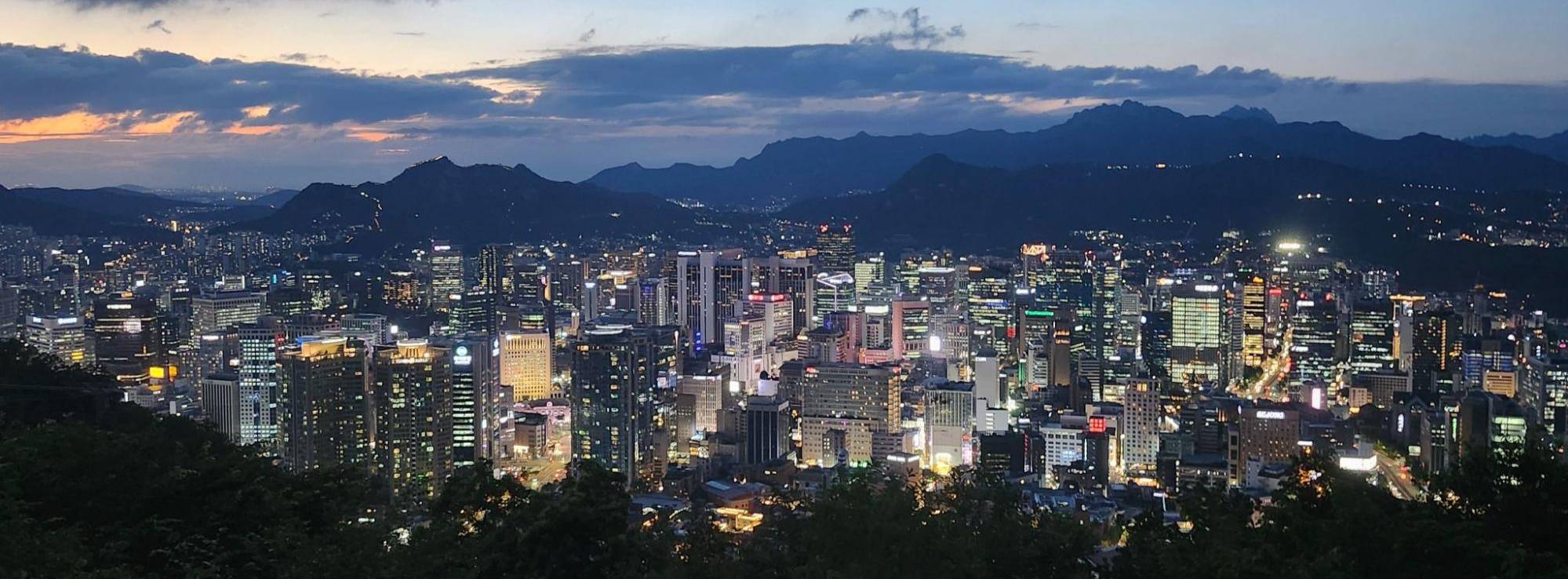
After the adventures of the evening, I would head back to the dorms to relax with my favorite k-drama, “Bring It On, Ghost”, or study for an upcoming exam. I shared a room with a genderfluid student from Seattle, something that the college went out of their way to arrange, as I am a transgender woman. I was incredibly surprised that I was put in the women’s dorm, despite South Korea being a fairly conservative country. I only ever faced discrimination once, and it was not malicious in intent. I was simply not allowed to go to the spa buddy day, as the spa staff were worried that I may make other patrons uncomfortable no matter which changing room or sauna I used.

Little Moments, Big Memories
I only know three or four words and phrases in Korean: hello, thank you, and yes/no. Despite this, I had absolutely no problem communicating or navigating daily life, as many Koreans I interacted with knew plenty of English. Seoul in particular has many other languages aside from English and Korean.
My favorite interaction came from a nail parlor where the owner did not speak either Korean or English. Through Google Translate, I learned she spoke Mandarin Chinese. When I left the store I said 谢谢 (xièxiè), Mandarin for “thank you”, which I picked up some of years earlier when I visited China during high school. The owner told me that I made her day to hear this. It made me incredibly happy to see her light up when thanked in her native language.
This experience, as well as the excitement many Koreans would get when I said anything in Korean made me want to learn these languages even more, something I am currently pursuing. It was very interesting to see the difference in how people perceive speaking a language between cultures. Americans tend to take for granted how many foreign countries teach and speak English quite well, while countries like Korea encourage and applaud any amount of speaking their language. I would like to point out that this is not the same everywhere, as I have had friends visiting countries such as France or Italy get at best blank stares and at worst insults hurled at them for trying to speak the local languages.