Communication Style

In Japan, people are constantly conscious of “reading the room” in everyday conversation, so their opinions and requests often get across without having to be stated explicitly. However, this kind of cultural norm isn’t as common in the U.S.. In the U.S., it’s important to clearly express your opinions and requests to others. If you don’t clearly express your thoughts, you might get swept along with the flow or end up with a result that doesn’t align with your wishes. Also, while the Japanese often use indirect expressions, English tends to be more direct, so the other person’s words might sound harsh. However, this is simply a characteristic of the English language—they aren’t angry, so don’t worry!
Expressing Kindness

In the U.S., when people meet—even if they’re strangers—they often exchange greetings and sometimes compliment each other’s clothes or hairstyles. Whenever I go shopping, someone asks, “How are you doing?” and that often leads to small talk. And the phrase “Have a wonderful day!” is a little phrase that brightens my day. While this is the norm in the U.S., for someone like me who grew up in a country without this kind of culture, these casual exchanges feel very fresh and make me happy. In Japan, people express their kindness to and consideration of strangers through their actions. For example, cashiers in Japan put the stuff we bought in the bag for us, so we don’t have to spend time on it. That was a normal thing for me until I came here, but now I know how helpful it is. Japanese people notice and care about small things to make their daily life comfortable. I feel that these differences are truly a reflection of cultural differences.
Personal Topics and Privacy

In the U.S., many people are friendly and open to talking about personal topics even with strangers. For example, they might talk about their families, how they spend their weekends, or their pets. In Japan, people usually wait until they’ve built a certain level of relationship before sharing personal details, so this might come as a bit of a surprise at first. However, once you get used to this environment, I think you’ll find that you no longer feel uncomfortable talking about personal matters.
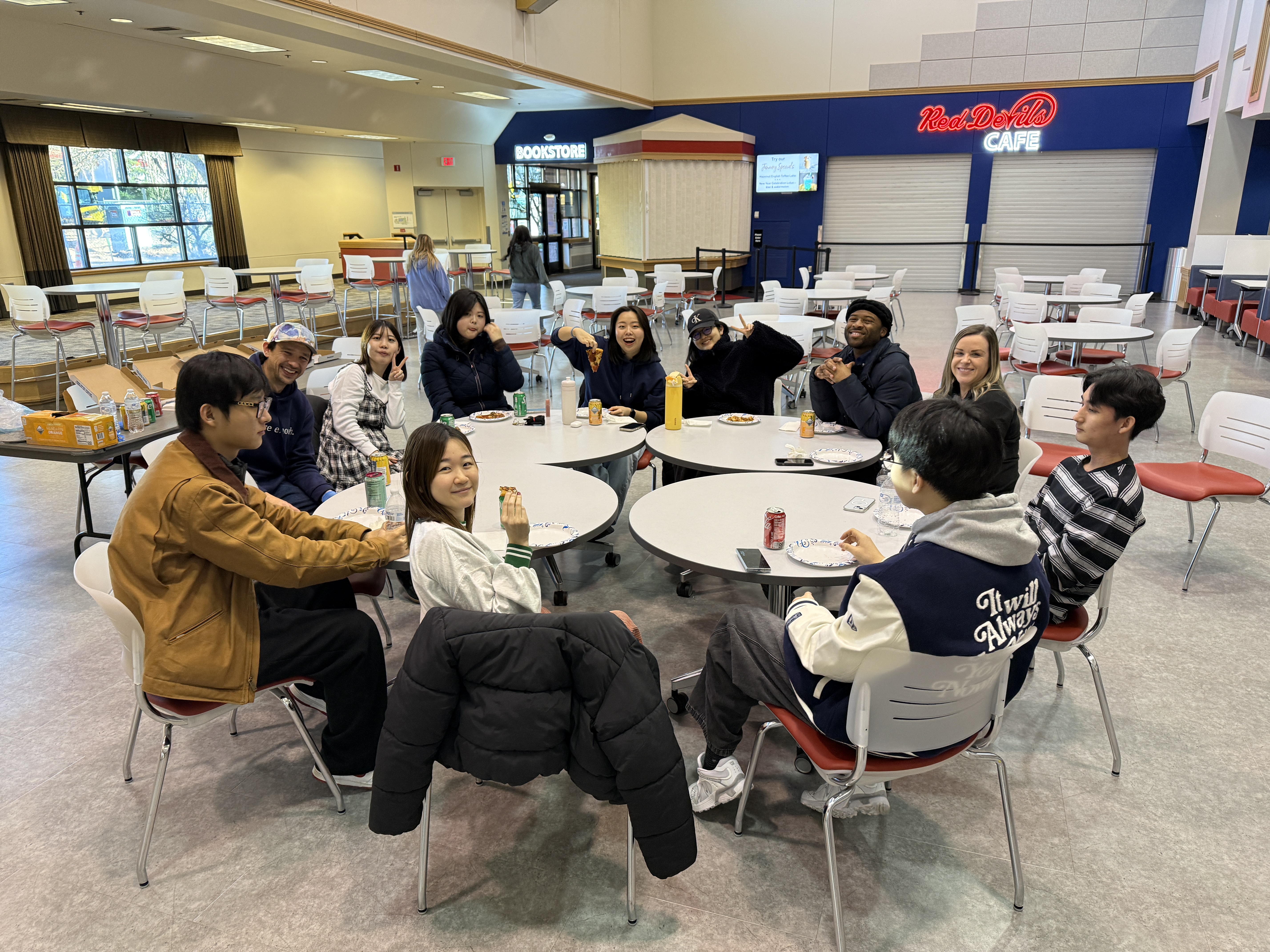
Cultural differences are not a matter of superiority or inferiority; they are simply
a matter of lifestyle. Living in a different culture has allowed me to realize that
things I once took for granted are not necessarily so, and to encounter new values.
Every day of life is full of small surprises and discoveries, and these experiences
have been truly valuable in broadening my horizons. Thank you for reading to the end!