
In this blog, I would like to introduce a tea ceremony event held in the Spring 2025 quarter. This event was a joint project with the International Club to introduce students to the tea ceremony and matcha, one of Japanese traditional culture. On the day of the event, many students were seen enjoying matcha, making it a lively and enjoyable time!
Since some of the Japanese students had experience in the tea ceremony, we performed the tea ceremony in front of the students. While making matcha, we explained the utensils and how to make matcha.
After explaining the instructions, students drank the matcha. Most matcha in the U.S. is sweet and contains sugar, so when the American students tasted Japanese matcha for the first time, they said, "I didn't know it was so bitter!" Chinese students said, "It's totally different from Chinese tea!" Japanese students also enjoyed it for the first time in a long time.
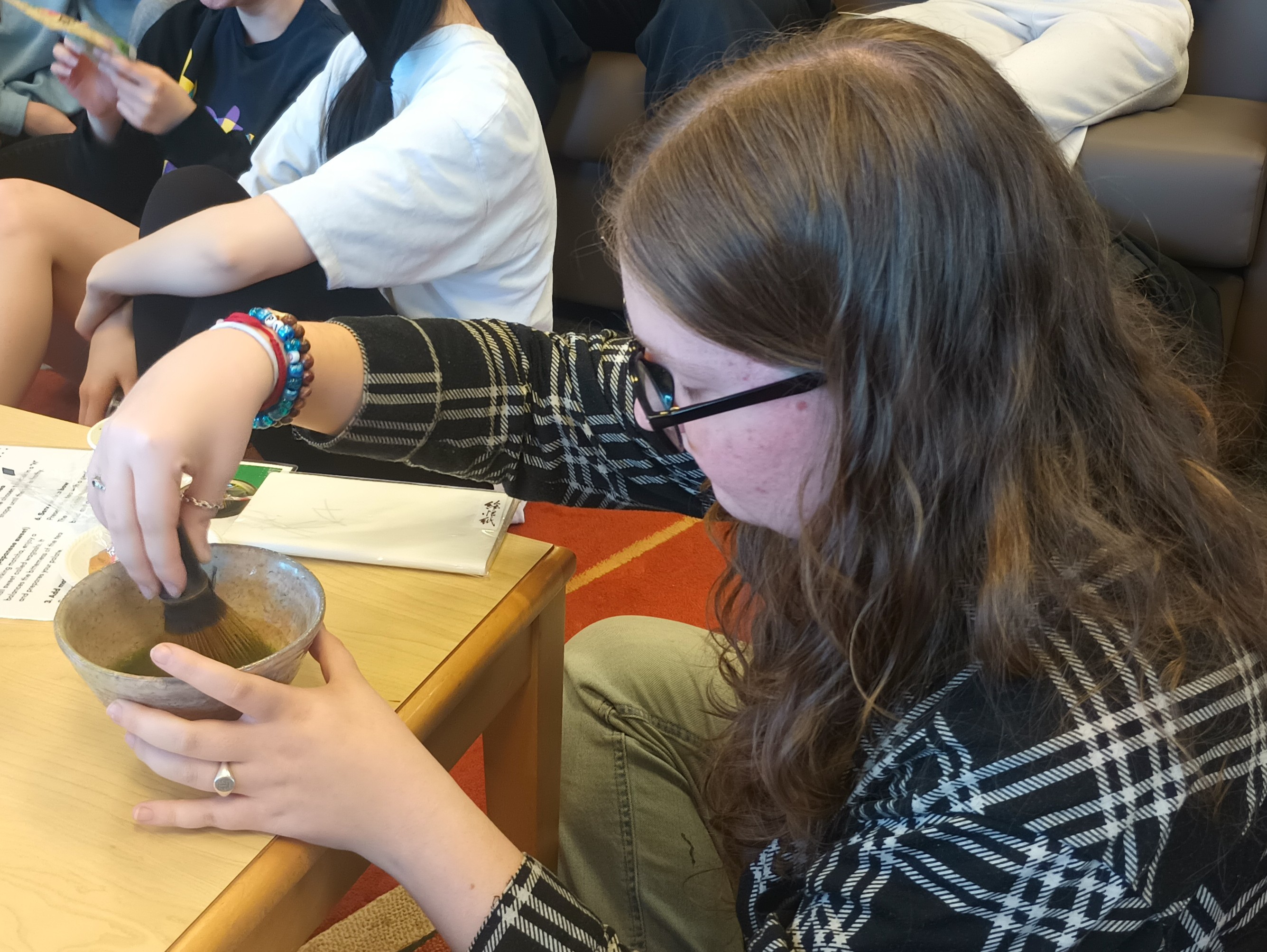
Students who were unfamiliar with the tea ceremony also had the opportunity to try making matcha tea. It is very difficult to make froth when making matcha, so everyone tried their best to make matcha with a flick of the wrist!
Wagashi is the most popular confectionery accompaniment to matcha. Therefore, at this event, we also prepared wagashi for the students to try. Wagashi, which have a unique sweetness not found in the U.S., such as red bean paste, must have been a new experience for those who had never eaten them before. Everyone seemed to like the wagashi more than I expected, and after an hour, all the wagashi we had prepared were gone! I was glad that everyone liked wagashi.
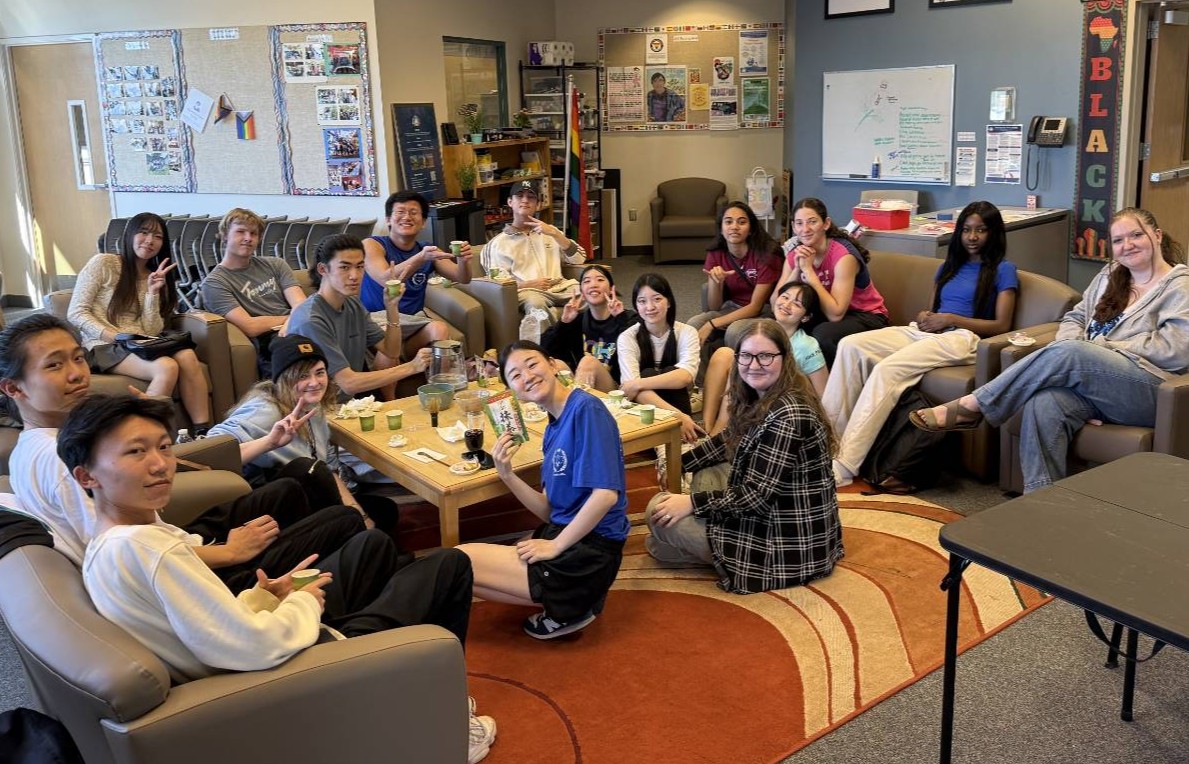
Through this event, many of the students were able to experience Japanese traditional culture and feel the joy of experiencing a different culture. The taste of matcha, the way of the tea ceremony, and Japanese sweets, wagashi, were all new to them. It was also a good opportunity for the Japanese students to introduce their own traditional culture.
I hope to continue to plan such cultural experiences in the future. Thank you for reading to the end!
茶道イベントを開催しました!
今回のブログでは、5月23日に開催した茶道イベントの様子をご紹介します。
インターナショナルクラブとの合同企画で、日本の伝統文化のひとつである茶道、抹茶について、生徒の皆さんに知ってもらいたいという思いから、このイベントを企画しました。当日は多くの生徒が抹茶を楽しむ姿が見られ、にぎやかで楽しい時間となりました!
日本人留学生の中には、茶道経験がある人が数人いたため、実際に生徒たちの目の前で茶道を披露しました。お抹茶を点てながら、道具やお作法を説明しました。
お作法の説明後、生徒の皆さんに抹茶を実際に飲んでもらいました。アメリカで飲む抹茶は大抵、砂糖が含まれている甘い抹茶なので、初めて日本の抹茶を飲んだ、アメリカ人生徒からは「こんなに苦いの知らなった!」という声や、中国人生徒たちからは「中国茶と全く違う!」という声など、様々な声が聞こえてきました。また、抹茶になじみがある日本人生徒たちも久しぶりの抹茶をとても楽しんでいました。
そして、茶道に馴染みのない生徒たちにもお抹茶を点てる体験をしてもらいました。泡を立てるように抹茶を点てると、まろやかな口当たりになるのですが、中々泡を立てるのが大変だったようです。みなさん一生懸命に手首を動かしてお抹茶を点てていました!
お抹茶のお供といえば、和菓子ですよね。そこで、このイベントでも和菓子を用意して生徒に食べてもらいました。あんこなどのアメリカにはない独特な甘さを持つ和菓子は、食べたことのない人にとっては新しい体験だったでしょう。思っていたよりも、みなさん和菓子を気に入ってくれたみたいで、一時間後には用意していた和菓子がすべてなくなっていました(笑)
今回のイベントを通して、多くの生徒が日本の伝統文化に直接触れ、異なる文化を体験する楽しさを感じてくれたように思います。抹茶の味や茶道のお作法、そして和菓子など、彼らにとってどれもが新鮮だったでしょう。また、日本人留学生のみなさんにとっては自国の伝統文化を紹介できる良い機会でもありました。
これからも、こうした文化体験を企画していけたらと思います。最後までお読みいただきありがとうございました!